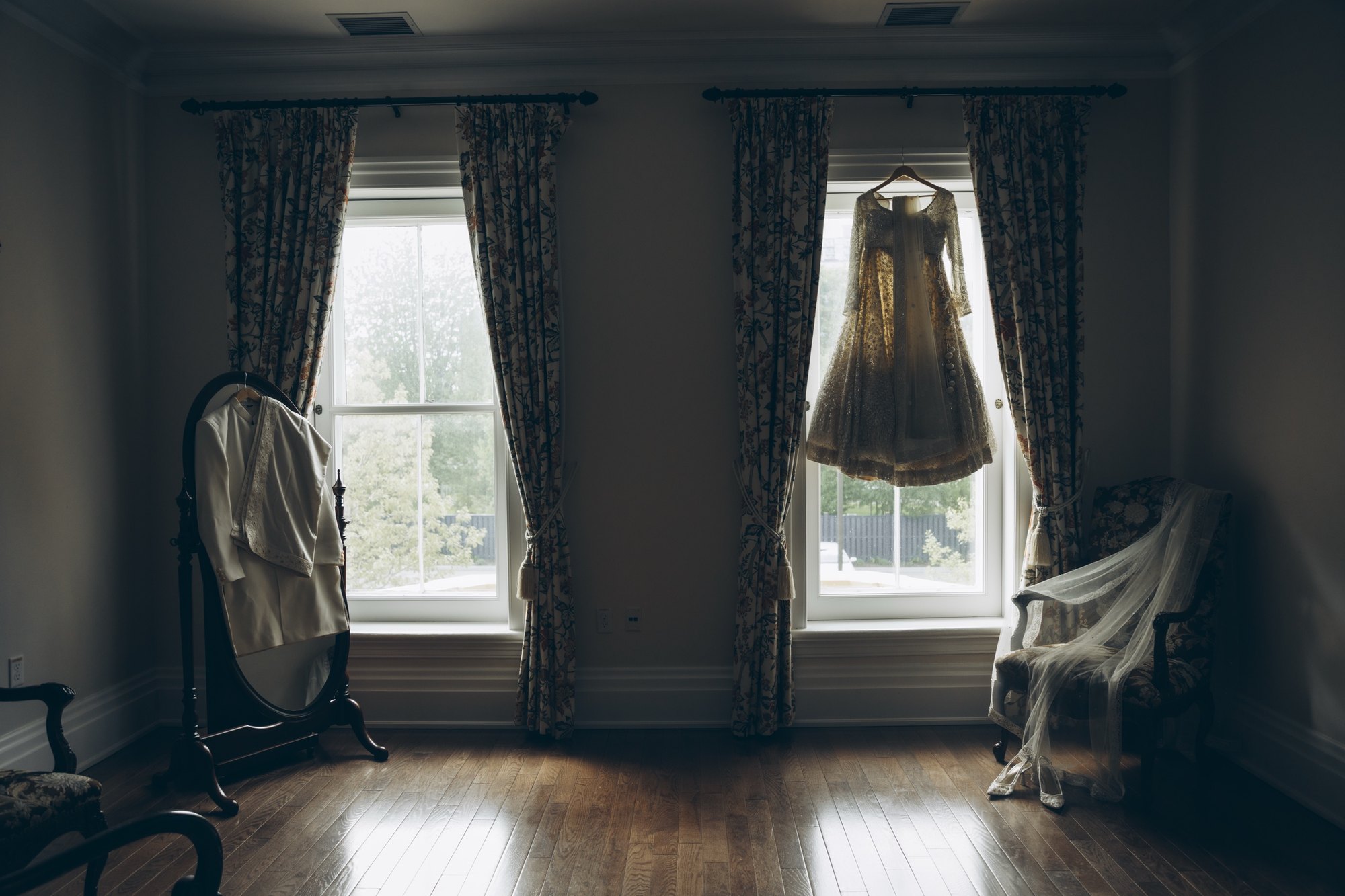
A fusion wedding often has two ceremonies on the same day. Both get planned carefully. The two hours between them usually don’t, and that is the part of the day I get asked about most.
Here is what is happening in those two hours.
The bride is changing out of a lehenga and into a gown, with hair and makeup done twice. Ninety minutes, if nobody knocks on the door.
The groom’s side is driving, and two hundred people do not leave a parking lot at once.
The parents have not eaten. They sat through the ceremony and greeted every cousin on tea, and a tired mother in the front row of the second ceremony is the photograph you will keep.
The venue is turning the room, and the photographer is counting light.
So the fix is not a faster timeline. It is building the second ceremony backwards from the first: its real end time, plus the drive, the change, and half an hour for the parents to eat. That, not the venue’s usual four o’clock, is when the vows begin.
Then the two hours go to people. One of my team stays with the bride from the gurdwara to the top of the aisle. Another is at the venue with the elders and the room. Nobody has to find us: one plan, carried by people who notice what someone needs before they ask.
At one of our weddings, half the family had flown in from Spain, and it was raining that morning. The ceremony was meant to be outdoors, so we moved it inside, and by the time everyone sat down it looked as if it had always been planned that way. Nobody from either side felt like a guest at the other’s wedding. That was only possible because the hours before it had been planned to the quarter hour, and everyone on the floor already knew where to stand.
If this is the shape of your day, it is the conversation to have early. Let’s connect.